Single Shot
What is it about stills that stay with me? The story they tell before dialogue even begins. Having grown up with three minute music videos filling the television, I got used to short scenes leaving an impact. My young brain took it a step further and immortalized stills to represent feelings and beliefs I held about particular films. This is what we are going to do. I’m just showing the still and telling you about it.
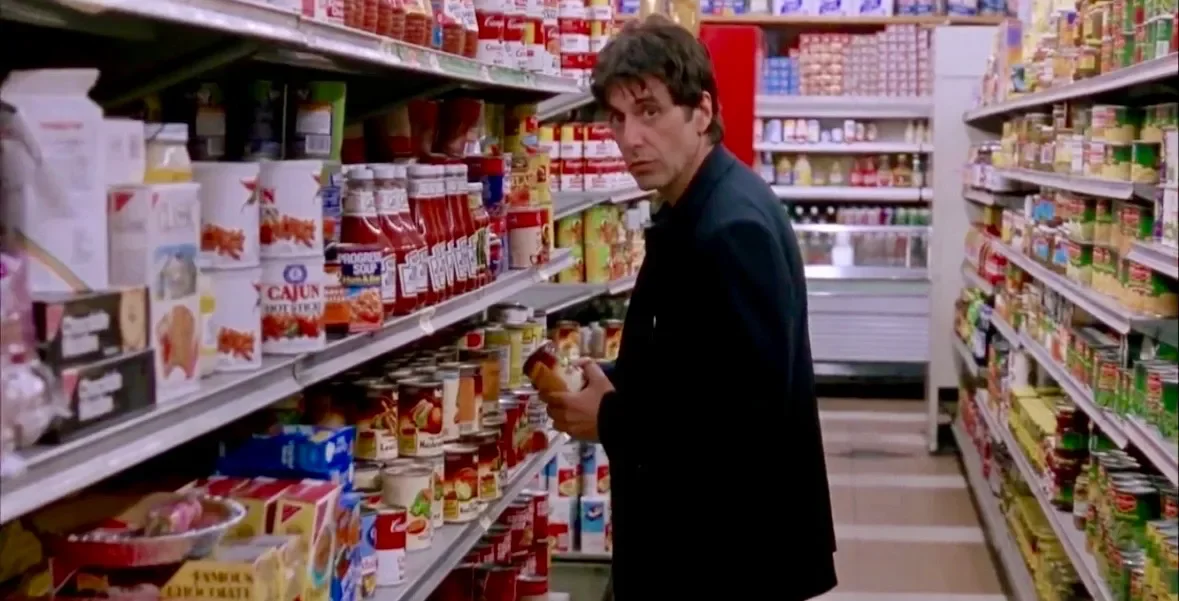
Who has ever entered a bodega and seen a guy as cool as Pacino standing there staring at sauce cans?
Pacino above in Sea of Love. Colorful supermarket aisle. It’s one of those aisles I don’t frequent. All it has are ingredients and sauces. It’s too much dedication and thought. What is Al Pacino doing here holding a can of sauce? Who is he staring at? Cool shot. This one has been with me for 30 years. My mom took me to this for a Saturday matinee. I was ten. I don’t remember a lot of the film, I pieced together the film over a decade watching it rerun first on premium cable then in pieces when it was played with commercials on regular television. Did I understand that this film was a detective investigating a suspect he was also dating? No, I just remembered the bodega, the phone call, and then that confession scene in the kitchen. Do you think you have to be in your thirties to comprehend the dynamics of the relationship in this film? I just really liked him walking through the aisle in a suit reading can labels with saxophone music playing. What I took away from this film? If I ever had to go to a grocery store, it could only be in the middle of the night, with great music, and a bodega where it opened up to the outside so I wouldn’t feel cooped up. Yes, I want to be the only one there looking at fruit in the produce with great music, checking out apples and oranges at close to midnight while having a conversation with a stranger that looked like Pacino. The only problem is that as you get older, you realize that if someone that looks like that walks up to you in a bodega on a late weeknight, you’re a mark in some way. Still might be worth it depending on what you have on your plate at the time.
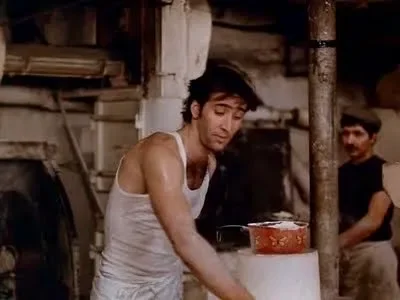
Just hanging out in the basement of a bakery throwing loaves in the oven.
A story will be told, and one will begin moments later, but if that never happens, they’d still be there churning out those loaves of bread, and the world would keep turning. Nicolas Cage in Moonstruck. This film can calm any anxiety. You watch a group of people going through their day and finding hijinks along the way. That 24-hour day of watching Cher start out at work and then meeting him in the bakery is the kind of scene that is good to stay with you. Another film I watched as a kid and loved. I described it over the years as a normal life being depicted on the screen. As if owning a brownstone and a corner store in Brooklyn Heights is normal but compared to the exaggerated lives we’re shown on screen, seeing one that is close to plausible is refreshing. I enjoy this film because it was written to show that her walking into the bakery is exactly what she was supposed to do. Their lives were on the right track, and he’s said that story about his hand every day on every shift he’s ever worked. Telling her that story in the bakery is what changed the trajectory of their lives. Perfect storytelling.
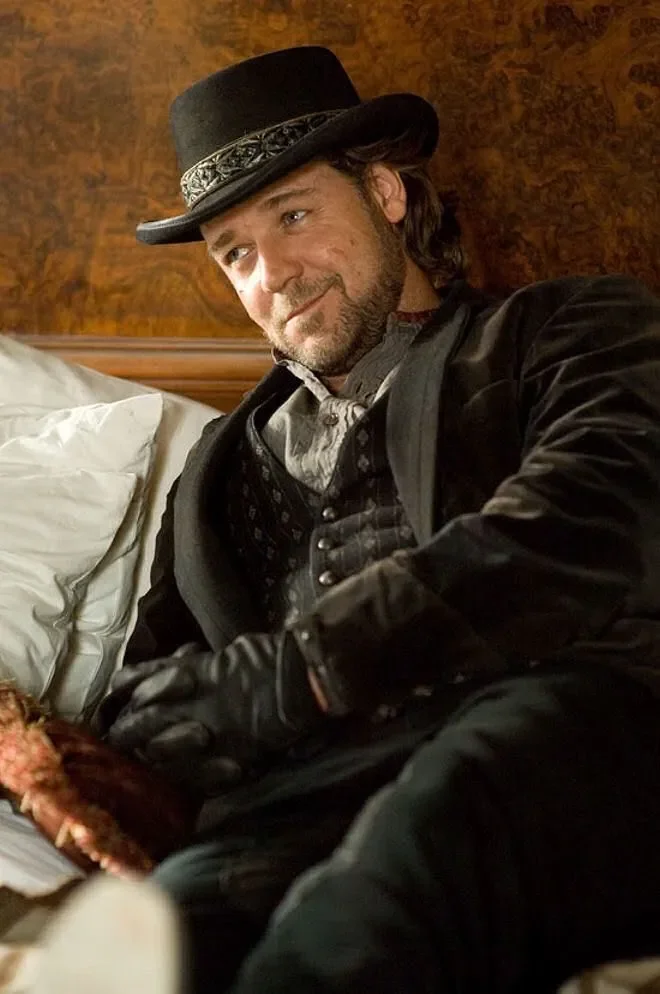
Fully clothed, obviously headed somewhere, but currently detained.
The only one that knows how it will end but also knows that they’ll never believe him if he says he’s not even the worst person in the room. Russell Crowe in 3:10 to Yuma. I just rewatched this the other night. Elmore Leonard knows how to give us honest discussions in elaborate set-ups. A bank robber and a rancher bringing him to justice are sitting in a hotel room waiting for the train. I loved the entire scene. The rancher, played by Christian Bale, is trying to make Crowe’s character understand that he’s a bad person and he’s escorting him to the train because it’s the right thing to do. Also, the reward will get him out of foreclosure. Crowe’s character sees an opportunity to try and enlighten someone. He tries to tell the rancher that the money he steals is insured, arresting him is a PR stunt, and that the Wells Fargo owners are currently robbing America across the country at that very moment, controlling the market, marking territories for urban cities they already own the land to, and collecting data on how to create tax shelters that will last their families generations after both occupants of that hotel room are long gone. Bale doesn’t hear any of it, exemplifying how those that can see through the smoke end up outliers that live their lives in ways that are different from the norm.
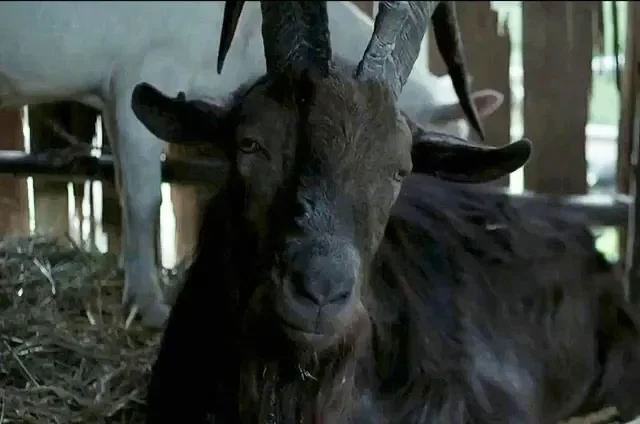
Just a goat. The GOAT?
Imagery so strong that sending this photo automatically creates a certain level of conversation. Robert Eggers is always fun and The VVitch was one of those films that got you to think. I saw it and thought it was different, but everyone I talked to thought it was revolutionary. I realized that the people that the film really resonated with, never thought from the beginning that people living in those cloistered, suppressed environments may not actually want to. The goat being the dark lord didn’t surprise me, neither did her choosing to join the cult. What stuck with me is why she was chosen. That little town was always cuckoo for cocoa puffs, but she was chosen before all hell broke loose, so she was marked for what? Eggers films make you think, but I never have it in me to revisit to figure out my initial theories. I just know that I will watch his films when they are first released and I’ll spend the next week or so reading the reviews to see what people take away from it. It’s a shocking moment for a lot of people, but would a goat asking you if you wanted to live deliciously really send you on a bend? I’d probably just think wow, animals can talk, then continue with my day.
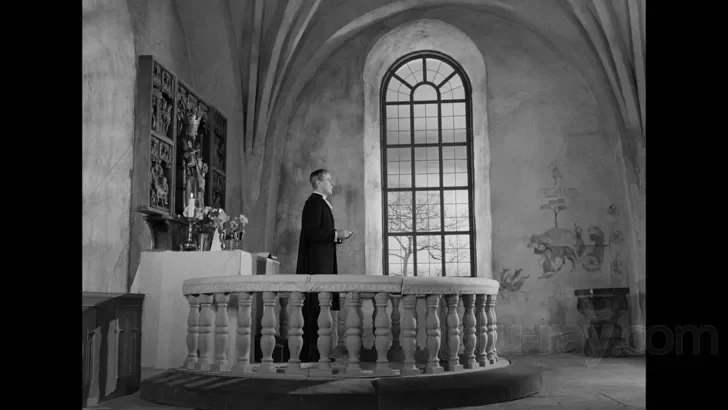
The photographer studied the light out of that window for six months before filming.
I recently asked someone if they could get the same amount of data with half an hour and an iPhone. Winter Light is a film I watched and immediately and foolishly wanted to emulate. We’re talking about stills and it doesn’t get much more iconic than this film. I learned later that they had the privilege of close to a year of preproduction to prepare for what Bergman wanted to capture. What was it like back then? Did the studio cover all of this or did they just take time off of work and concentrate on the art while life continued without them and then circled back after the project was complete? I’ll imagine that I’m special in my ability to choose stills that stay with a viewer. Then I’ll take an honors film class that explains that every emotion I felt was constructed before the film was shot. That my reaction was the goal of the auteur that shaped it. All of that done by spending months measuring the amount of light that would come through a window at a certain time of day. These are the moments that linger with purpose. Some guy was able to walk into this church and say, yeah, if I film this window at just this light under the constraints of the story I wrote it will make the audience lose their minds.
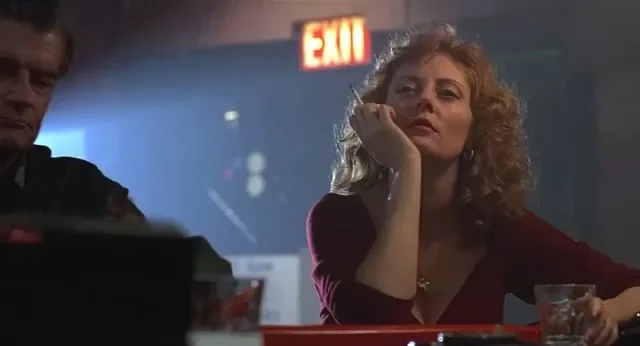
If I have ever gone out with you and told you to look cool, this is what I meant.
I’ve written so many “lost in thought” bourbon scenes. This is what I’m picturing. Susan Sarandon in White Palace is what the wrong kind of dream is made out of. I caught this on Lifetime television when I had a summer off in school. Do you know how when you’re in your early teens, anything over the next grade you’re headed into seems ancient? When they both confess to each other their ages, she’s in her forties, and he’s in his twenties, I didn’t get it. I just thought it fell on the same level as him being in finance and her being a waitress in a diner, just a small detail. Again, at an impressionable age, I was taken by characters that meet by chance in the middle of the night, this time in a diner. Lifetime television owes an apology to elder millennials for not having a PSA at the beginning of their films that explained, “if you’re home for summer vacation watching this without permission on cable, what you are about to see isn’t fictional, it will just end badly. You’re fourteen, as a corporation, we don’t have the tools or language to explain to you that you will never be Susan Sarandon.” I rooted for them the entire film, and when he quits his finance job to find her in the city and play the Doobie Brothers while telling her how he felt, I just thought it was so cool. Then you hit the age she is in the movie, and you realize that any guy in his twenties approaching you in a bar like in this film would be met with the response, “seriously, what kind of an asshole do you take me for?” I will continue to live vicariously through Susan Sarandon in films, and the still above is a classic.
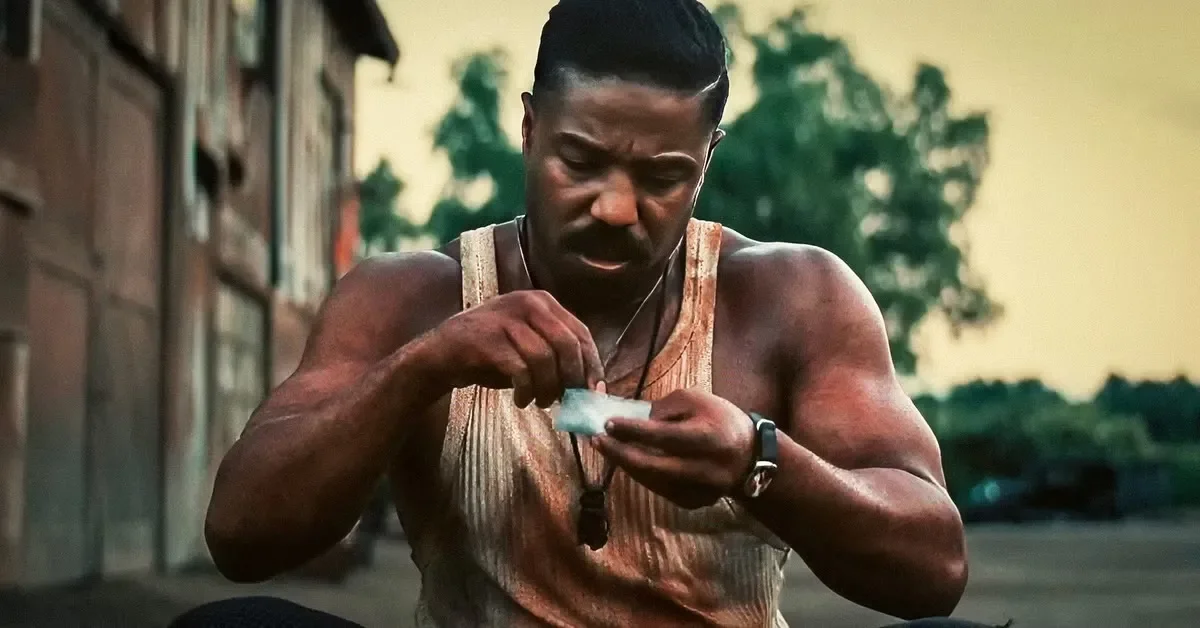
Someone doing something they haven’t necessarily had to do before and it’s not going to end well.
Sinners was a revelation. A lot of people were introduced to Clarksdale. Some of us were cheering because we’ve been there and knew the exact energy that Coogler was pulling from. Clarksdale is where Robert Johnson met the devil and created Blues music. No one knows if that story is true, it’s probably just urban legend. Creating a vampire story in that town, that was just cool. Smoke and Stacks were a team and Smoke rolling a cigarette without his brother was a really sad scene to watch. I don’t know if the devil is real, but I know I drove across the entire state of Mississippi doing 100 mph to get to Memphis on a Sunday morning and I wasn’t pulled over. There might have been luck on my side, but whatever it was, I got to Graceland on time. I was chain-smoking and blasting music while I did it too. I miss cigarettes.
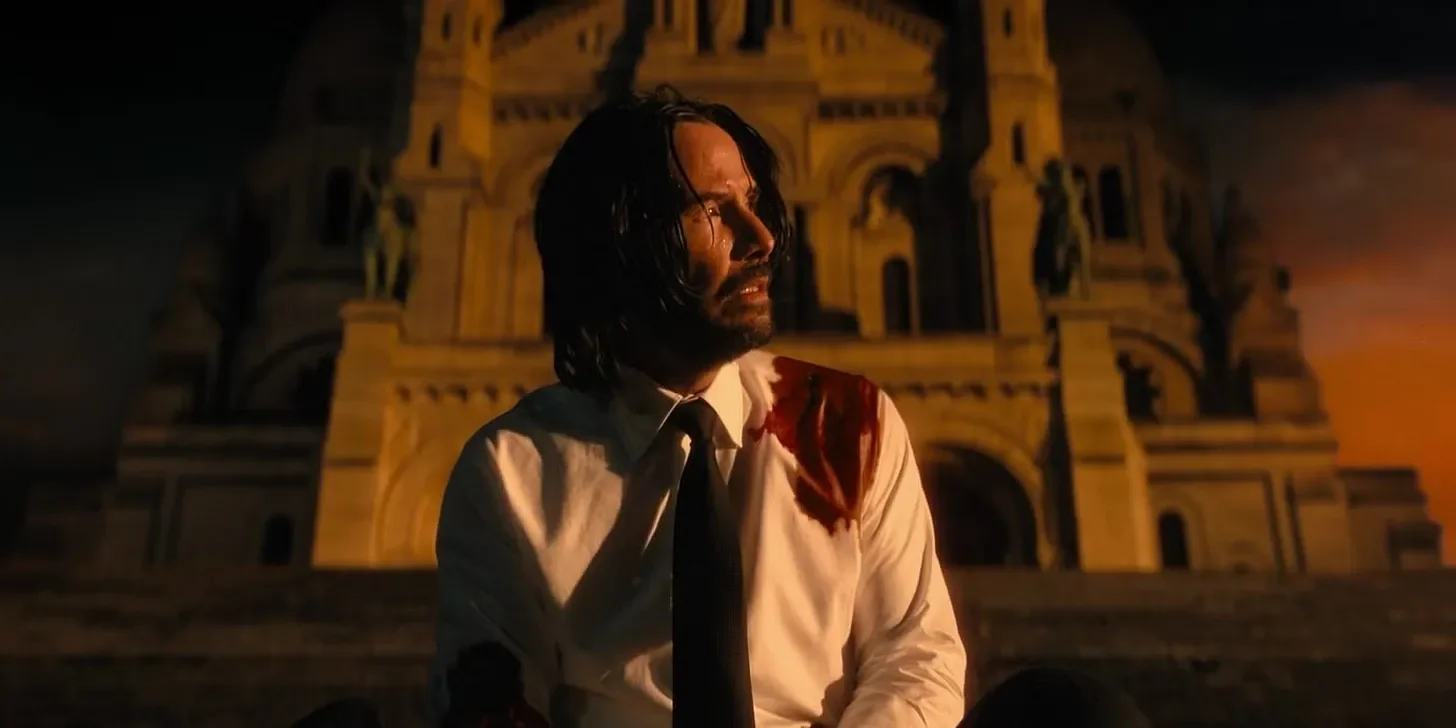
It’s been a long day, let me sit here for a minute.
Oh, look, the sunrise. I love John Wick 4 because of the comedy of how he kept going, when everything that was happening wasn’t necessarily his doing. I followed the series, but I got pulled in during the third film, and then the fourth film just undid me. The Odessa steps. I saw that fall at the movies, and then I watched it again at home after tearing my meniscus. I felt every crack and crunch he went through. The difference between the film and reality, is he immediately stood up and walked right back up those steps. No ambulance, no insurance paperwork, he just got up and did it again. That was a victory before the showdown. It was his suit that made me cry. They dressed him in a funeral suit. When he sits down on the steps to watch the sunrise, he loosens the tie, completely changing the style of the outfit. I couldn’t decide if he was changing the trajectory of his life or if he just needed to breathe better. No one can tell me there isn’t depth to this series. It came in with Reeves giving less than forty words of dialogue, yet you can remember the details of his expressions and stances in this film. It’s the way clothes hang on him. Anyone that can carry a film on the perfect use of their stature alone is an expert at their craft.
Stills that stay with you. The moments above are ones that I know like old hat and I will bring them in conversation so I can talk about them more. I wonder if I should continue doing this but with other angles of film. I just know that a reason why film resonates with me is because of moments above. I’d like to think each was a fluke that just magically happened, but there were people that knew and that’s how they ended up on the screen.
